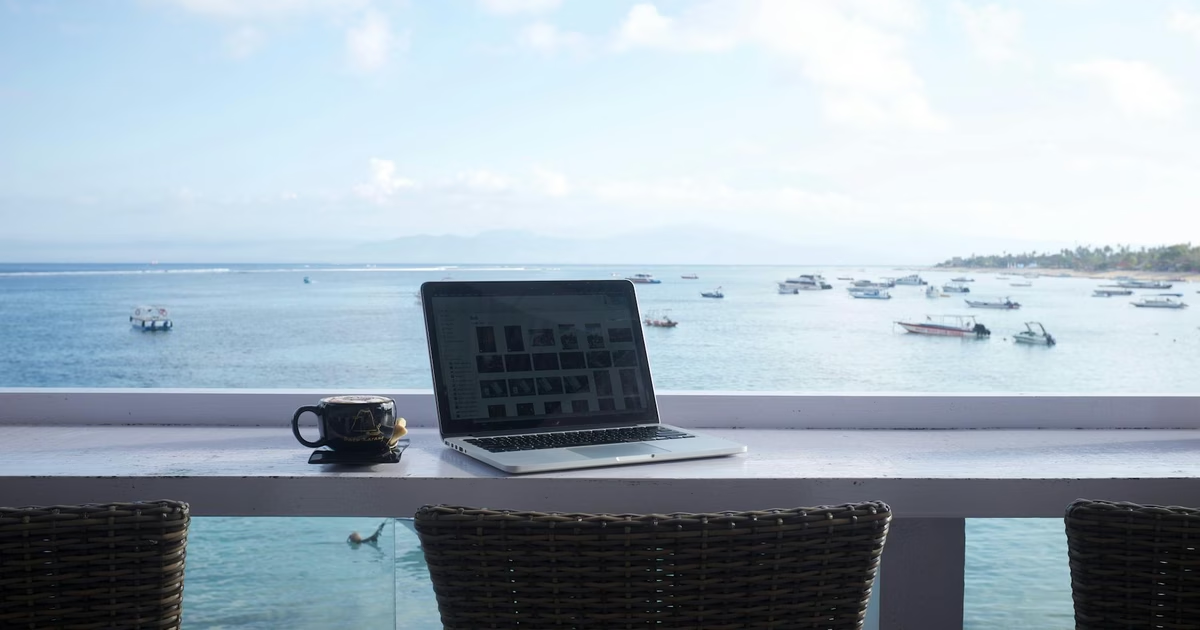

Bali has the aesthetics of a startup scene — coworking spaces in Canggu, founder meetups, Instagram feeds full of laptops and rice terraces — but very little of the substance. The majority of people calling themselves founders in Bali are selling courses to other people in Bali who want to sell courses. The real founders with real companies passed through briefly and moved somewhere with better infrastructure.
What does the Bali founder scene actually look like?
Walk into any Canggu coworking space on a Tuesday afternoon and you'll find a predictable cast: people building "personal brands," coaches coaching other coaches, dropshippers running Facebook ad arbitrage, and the occasional person building something real who looks increasingly uncomfortable with their surroundings. The scene is dominated by lifestyle optimization content — the Instagram account IS the business, or at least, the business aspiration.
This isn't an accident. Bali self-selects for people who prioritize lifestyle over operational intensity. The cost of living is low enough that you can sustain yourself on a few thousand dollars a month without building much. That's the trap: the environment makes the absence of real traction feel fine, even aspirational.
Why does cheap cost of living work against serious founders?
Low burn rate sounds like a founder advantage — and it is, when it's used to extend runway while building something real. But in Bali, the low cost of living primarily enables founders to avoid the reckoning that comes with higher overhead. When $1,500/month covers a villa, food, and coworking, there's no urgency. Projects that should be killed after six months of no traction stay alive for two years. The scene reinforces this with constant validation: everyone around you is also "building something."
Contrast this with Dubai, where overhead is real and the social density of serious operators creates genuine accountability pressure. Or Singapore, where the infrastructure signals that you're either building something valuable or you're not. Bali signals nothing except that you've optimized for a cheap, beautiful lifestyle — which is fine if that's the goal, but shouldn't be confused with building a company.
What's the coaching economy and why does it dominate?
The coaching economy in Bali is self-sustaining and self-referential. Someone who made money selling a course about dropshipping teaches others to dropship. Someone who built a following documenting their Bali lifestyle sells a course on building a lifestyle following. The customers are other nomads who want the same thing. Revenue flows within the ecosystem rather than from external customers with real problems to solve.
This isn't unique to Bali — it's the same dynamic as any scene where lifestyle documentation becomes a business model. But Bali's density of this archetype is particularly high, and the social norming around it makes it easy to mistake volume for validation. When everyone around you is doing the same thing, the feedback loop that should tell you your business model is weak never fires.
When does Bali make sense as a base?
Bali is excellent for: taking a working vacation while your business runs without you, creative work that benefits from environment change, short-term cost reduction between higher-intensity periods, and genuinely low-overhead lifestyle businesses that don't need to scale. If you're post-product-market-fit and running a business that operates asynchronously, Bali's infrastructure and cost structure work fine.
What it's not good for: building anything that requires operational intensity, close customer feedback loops, or the kind of focused environment that comes from being surrounded by people who are also doing serious work. The scene won't push you forward — it'll make staying comfortable feel like progress.
Verdict
Go to Bali. It's beautiful and cheap. Just don't confuse the founder aesthetic there for a founder ecosystem. The real signal of whether you're building something is your revenue chart, not your coworking space address. If you need external accountability and density of serious operators to stay sharp, Bali is the wrong environment. If you're already disciplined and just want a cheap, comfortable place to work, it's one of the best options in the world.
Frequently Asked Questions
Is there a legal way to work remotely in Bali long-term?
Indonesia introduced a Digital Nomad Visa in 2023, offering up to 5 years of legal stay for remote workers earning income outside Indonesia. The income requirement is around $2,000/month. Before 2023, most long-term nomads in Bali operated in a legal gray area on visa runs.
Is the internet in Bali good enough for remote work?
In Canggu and Seminyak, coworking space internet is generally adequate for video calls and standard SaaS work. Residential internet is inconsistent. Power outages are occasional. Serious real-time operations (trading, live customer support) need redundant connectivity.
What are the best coworking spaces in Canggu?
Dojo Bali and Outpost are the most established. Dojo has the best community events and networking density for the nomad demographic. Outpost is quieter and better for focused work. Both have reliable enough internet for most use cases.
How does Bali compare to Chiang Mai as a nomad base?
Both are cheap, beautiful, and dominated by the same coaching/lifestyle-business demographic. Chiang Mai has slightly better infrastructure and a longer-established nomad community. Bali wins on aesthetics and social scene. Neither is where you go to be surrounded by people building serious companies.